
Green and Hawksbill Turtles Around Havelock
We still see turtles on Havelock reefs. How to tell greens from hawksbills, how close is too close, and why we do not chase them.
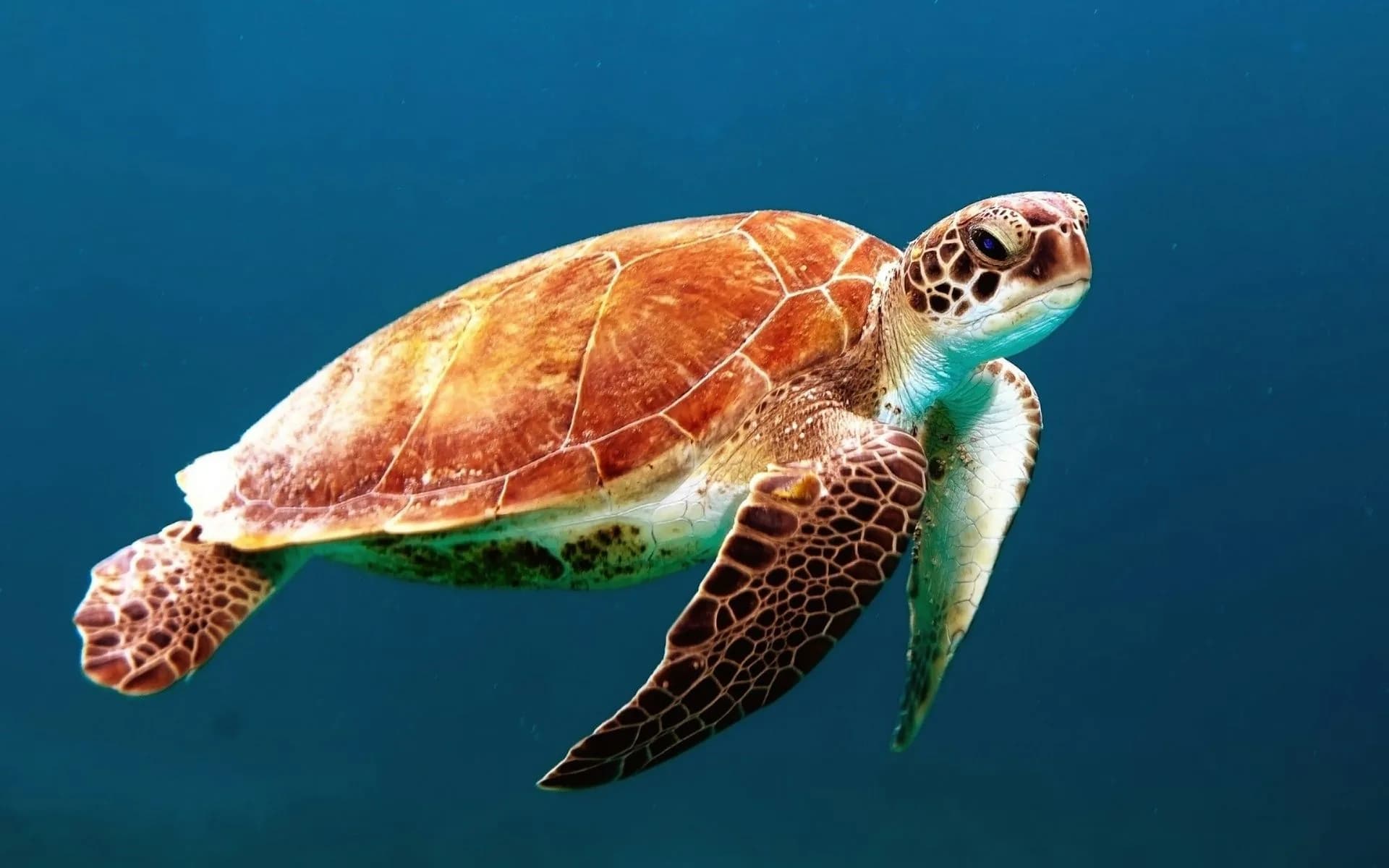
They graze here
Green turtles feed on seagrass and algae in the shallows. Hawksbills work the reef for sponges. You might see one on an intro dive. You might see none. We do not put turtles on a package as a promise.
Telling them apart
Greens look rounder, with a smoother shell edge. Hawksbills have a sharper face and overlapping scutes — the old “tortoiseshell” pattern. We do not touch either. We do not ride them. We do not block their way to the surface; they breathe air.
Come in from the side, not the head. Stay off the bottom so you do not pin them against coral. If they swim off, let them. No strobe in the face at one metre.
Nesting beaches
Some Andaman beaches are nesting habitat in season. That is forest department and village work, not a night show from the dive boat. Stay off marked dunes. Lights and crowds on a nesting beach undo a lot of careful work.
Book a dive and we will tell you what the day’s sites usually hold — including when that is “maybe a turtle, maybe not.”